
Fasting and Sleep: Why IF Helps, Extended Fasts Hurt, and It All Comes Back
Sleep questions come up constantly: Does fasting improve sleep? Why can't I sleep during my fast? Is bad sleep a reason to stop?
The answer depends entirely on which fasting you mean. Intermittent fasting can improve sleep and circadian rhythm. Extended fasts usually make sleep worse while they last, and then it returns to normal, often slightly better, after refeeding. Mixing these two up is why fasting-and-sleep advice online contradicts itself. Here's the honest picture, from the research and from my own tracked fasts.
🌙 Intermittent Fasting: Can Help, Not Guaranteed
A consistent daily eating window is a circadian anchor. Your gut, liver, and metabolism run on internal clocks, and eating at random hours, especially late at night, scrambles them. IF with an earlier eating window means no heavy digestion at bedtime, more stable overnight glucose, and meal timing that reinforces the sleep-wake cycle instead of fighting it. Many IF practitioners report falling asleep faster and waking less.
The honest caveat - the research average is unimpressive. A 2025 network meta-analysis of 16 RCTs found no significant sleep quality benefit from intermittent fasting overall, and alternate-day fasting actually worsened sleep latency. This is exactly why Sleep was scored down in our 2026 benefits re-audit. The circadian logic is sound and many individuals benefit, but IF is not a proven sleep intervention. If it helps your sleep, it's likely the regularity and the earlier window, not fasting magic.
🛌 Extended Fasts: Expect Worse Sleep, Temporarily
Multi-day fasts are a different story. The body is under real physiological stress - and sleep reflects it:
Cortisol rises. In my 10-day fast it climbed to 18.5 µg/dL from a baseline of 10.8. Elevated cortisol competes directly with sleep quality.
Glucose runs low overnight, which can trigger adrenaline and early waking.
Electrolyte losses cause night urination and restlessness if intake isn't managed.
My tracked data shows it clearly. During the 2026 10-day fast, sleep scores dipped to 58 on day 7, the hardest day by every measure, while readiness stayed solid at 75-89. During my earlier 7-day fast, sleep scores dropped into the low 60s. Deep sleep took the biggest hit - during one 10-day fast, deep sleep was only 7% of the night.
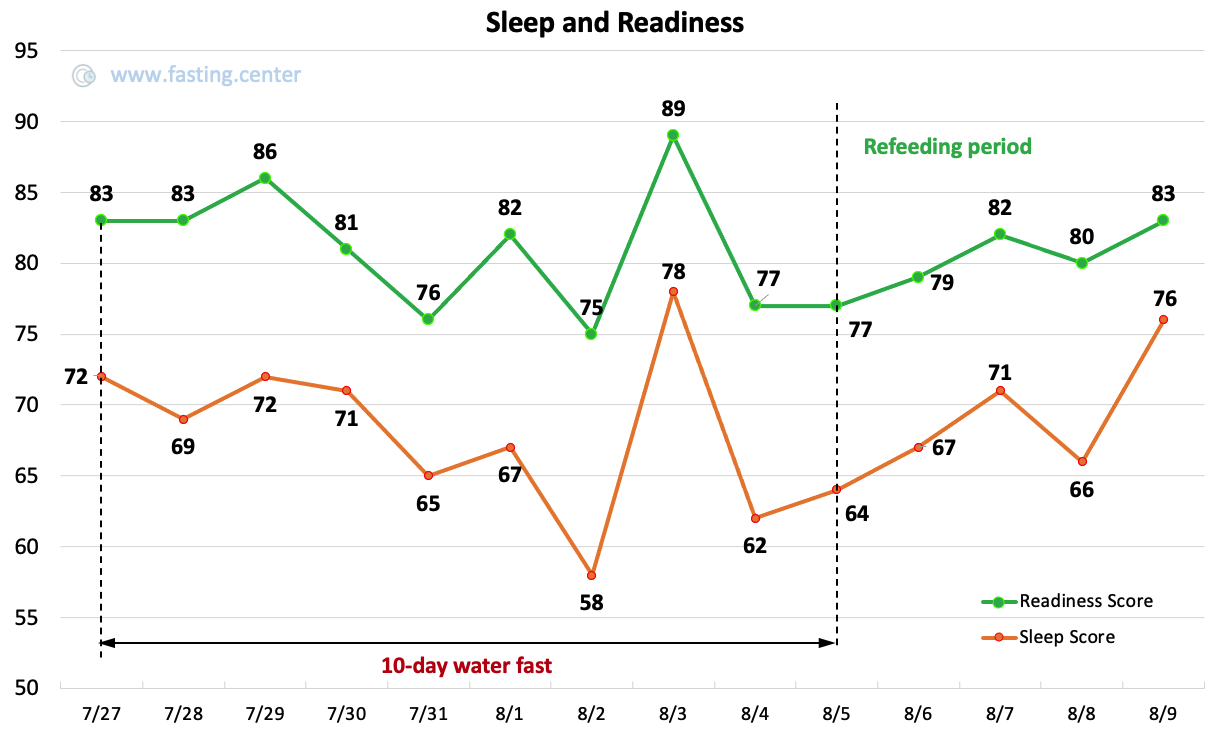
Sleep and readiness scores across my 2026 10-day fast - the day 7 dip to 58, recovery starting day 8.
One exception worth noting - in my 2025 10-day fast, deep sleep was phenomenal across multiple nights. In 2026 it wasn't, same protocol. Summer heat, activity load, or electrolyte timing could all explain it. Extended-fast sleep is variable even for the same person.
🔄 The Rebound Is Real
Sleep doesn't just recover after refeeding, it often overshoots. After my 7-day fast, sleep scores climbed from the low 60s back above 80 within days, HRV jumped to 54 ms, and resting heart rate settled at 43 bpm. After the 10-day fast, my overall sleep biomarker score went from 75 during the fast to 84 after refeeding - above the pre-fast baseline. That pattern has held across my 7, 9, and 10-day fasts - worse during, better after.
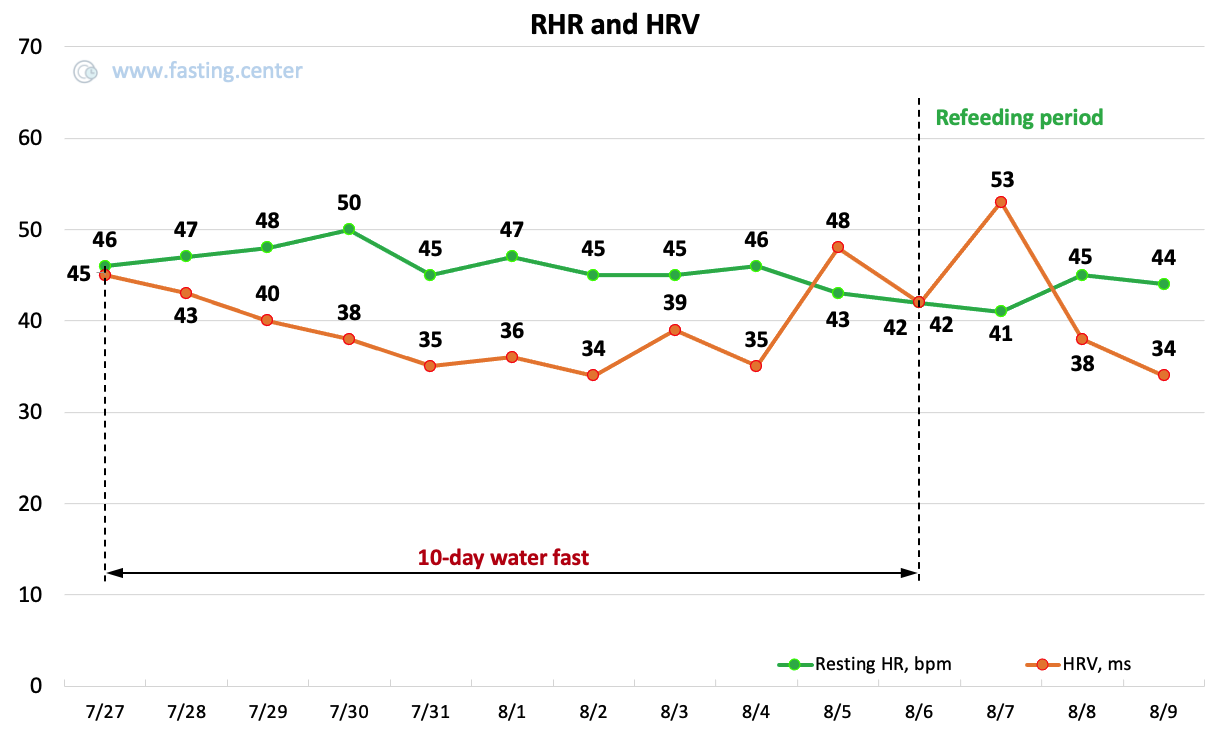
Resting heart rate and HRV across the fast and refeeding - the post-refeed HRV spike marks the recovery.
🔧 What Actually Helps Sleep During a Fast
When doing IF, keep the eating window early, and avoid eating close to bedtime.
During extended fasts, front-load electrolytes. On day 7 of my 2026 fast I moved all electrolyte intake to before 3 PM. Night urination returned to normal and sleep quality noticeably improved - the single most effective fix I've found.
Don't push hard workouts late in an extended fast - my worst sleep nights followed hard evening gym sessions with low blood sugar.
Expect days 5-8 of an extended fast to be the roughest for sleep, and don't panic. It's temporary.
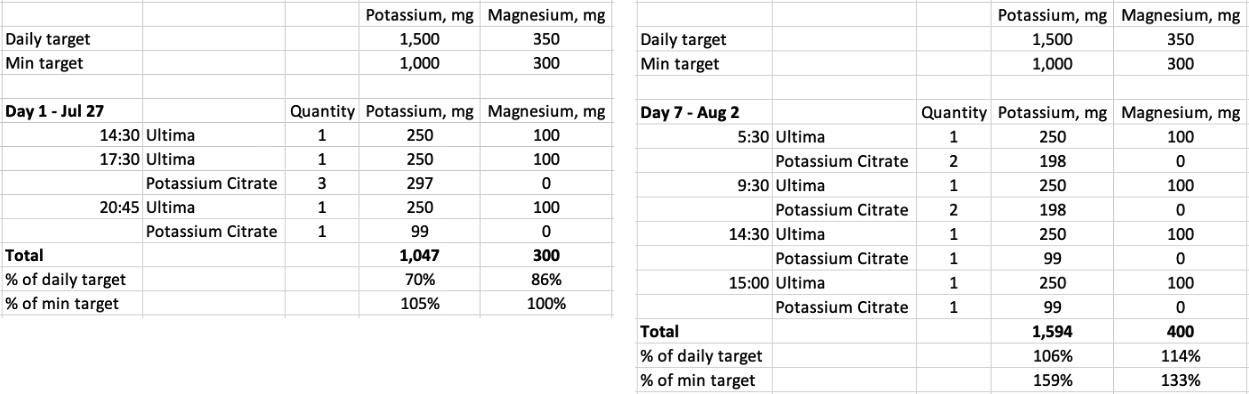
The fix that restored sleep mid-fast - all electrolytes moved before 3 PM, totals higher.
📝 Bottom Line
IF and extended fasting have opposite sleep profiles. IF, done with a consistent early window, supports circadian rhythm and may improve sleep, though the trial evidence is weaker than the hype. Extended fasts reliably degrade sleep while they last - higher cortisol, lower glucose, lighter sleep - and it fully recovers after refeeding, often landing above baseline. Worse during, better after. If you track one thing during your next fast, track sleep - it's the most honest signal of how hard your body is working.
For how sleep scores against all 37 fasting benefits, see the full ranked list at fasting.center/fasting-benefits.
📚 References
Below are the key peer-reviewed papers supporting the major claims in this post, including the trial evidence on intermittent fasting and sleep, cortisol elevation during prolonged fasting, and how meal timing interacts with circadian rhythm.
"The effect of intermittent fasting on sleep in adults with overweight or obesity: a network meta-analysis of randomized controlled trials" 🔗 - The 2025 network meta-analysis of 16 RCTs cited in this post. Found no significant benefit on overall sleep quality, with alternate-day fasting worsening sleep latency compared to calorie restriction and usual diet.
"The effects of intermittent fasting on sleep quality and cardiometabolic health outcomes in adults with overweight/obesity status: a systematic review and meta-analysis of randomized controlled trials" 🔗 - 2025 meta-analysis of 18 RCTs. IF improved weight, BMI, and blood pressure, but showed no overall effect on sleep quality - supporting the "not a proven sleep intervention" claim.
"The Window Matters: A Systematic Review of Time Restricted Eating Strategies in Relation to Cortisol and Melatonin Secretion" 🔗 - Review of how eating-window timing shapes cortisol and melatonin rhythms, with higher evening cortisol linked to reduced sleep quality - supporting the early-window recommendation.
"Early Time-Restricted Feeding Improves 24-Hour Glucose Levels and Affects Markers of the Circadian Clock, Aging, and Autophagy in Humans" 🔗 - Human trial showing early time-restricted feeding aligns eating with circadian metabolism and alters circadian clock gene expression - the mechanism behind IF as a circadian anchor.